
The history of the 20th and 21st centuries is inextricably linked to the development of nuclear technology. From the moment the first test echoed through the New Mexico desert. The world entered an era defined by “The Great Deterrent.” However, beyond the general concept of the atomic bomb, there are specific weapons and projects that, due to their sheer power, unusual design. Or historical impact, sent shockwaves through the nations that built them and the world that watched.
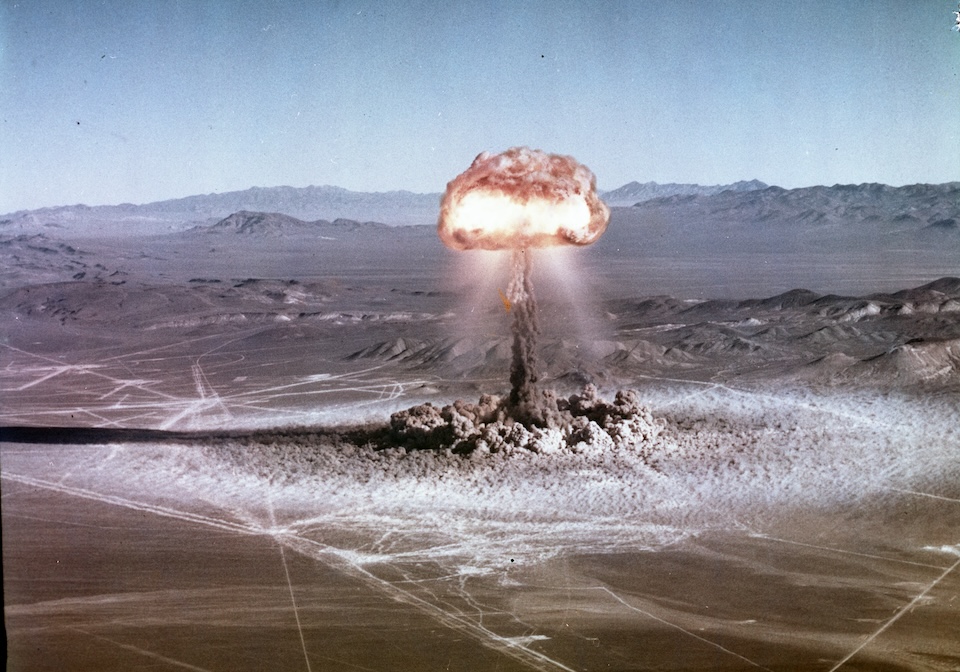
These weapons represent the extremes of human engineering and the terrifying reality of total warfare. Here, we examine the ten most nationally and internationally shocking nuclear weapons ever developed.
1. Little Boy and Fat Man (United States)
It is impossible to discuss shocking nuclear weapons without beginning where it all started. Little Boy and Fat Man are the only two nuclear weapons ever used in active combat. Little Boy, a uranium-235 gun-type bomb, and Fat Man. A plutonium-239 implosion-type device, obliterated the cities of Hiroshima and Nagasaki in 1945. The shock was not merely in the explosion. But in the realization that a single aircraft could now erase an entire city. This redefined national security and launched the global nuclear arms race.
2. Tsar Bomba (Soviet Union)
In 1961, the Soviet Union detonated the RDS-220, better known as the Tsar Bomba. To this day, it remains the most powerful man-made explosion in history. With a yield of approximately 50 megatons—over 3,000 times the power of the Hiroshima bomb—the shockwave circled the earth three times. The fireball was so large it could be seen from 1,000 kilometers away. It was a weapon so large that it had no practical military use. Its sole purpose was to shock the United States into realizing the extent of Soviet thermonulcear capability.
3. Castle Bravo (United States)
In 1954, the U.S. conducted the Castle Bravo test at Bikini Atoll. This was supposed to be a standard 6-megaton test, but due to a theoretical error, the yield reached 15 megatons. The explosion caused severe radioactive contamination of local islanders. And the crew of a Japanese fishing boat, the Lucky Dragon No. 5. This event shocked the American public and the international community. Leading to the first major global outcries over nuclear fallout and the environmental impact of testing.
4. The W82 Enhanced Radiation Weapon (The Neutron Bomb)
During the Cold War, the concept of the “Neutron Bomb” created a unique kind of moral and political shock. Designed to release a massive burst of lethal radiation while minimizing the physical blast damage, it was described by critics as a weapon that “kills the people but leaves the buildings standing.” The idea of a weapon that prioritized property over human life caused massive protests across Europe and the United States, leading to significant diplomatic friction within NATO.
5. The Davy Crockett (United States)
Shocking not for its size, but for its portability, the Davy Crockett was one of the smallest nuclear weapons ever make. It was a recoilless gun that fired a tactical nuclear warhead with a yield of about 10 to 20 tons of TNT. The thought of a small squad of soldiers carrying and firing a nuclear weapon on a conventional battlefield was a terrifying prospect. It highlighted the era of “tactical” nuclear warfare, where the line between conventional and nuclear conflict became dangerously blurred.
6. R-36M / SS-18 Satan (Soviet Union)
The West gave this Soviet Intercontinental Ballistic Missile (ICBM) the nickname “Satan” for a reason. During the 1970s and 80s, the SS-18 was the heaviest and most lethal missile in the Soviet arsenal. A single missile could carry up to 10 MIRVs (Multiple Independently Targetable Reentry Vehicles), meaning one launch could target ten different cities simultaneously with massive accuracy. Its existence forced a total rethink of American missile defense strategies.
7. The British Blue Steel and Blue Streak
For the United Kingdom, the Blue Steel stand-off missile and the abandoned Blue Streak project represented a shocking moment of national realization. As a former global superpower, Britain struggled to maintain an independent nuclear deterrent. The technical difficulties and astronomical costs of these projects shocked the British taxpayer and eventually led to the UK relying on American-made delivery systems (like Polaris and later Trident), a move that sparked decades of debate over national sovereignty.
8. France’s Force de Frappe
France’s decision to develop its own nuclear triad (land, sea, and air) under Charles de Gaulle was a shock to the established bipolar world order of the US and USSR. France’s insistence on “independence” meant testing in the Sahara and later the South Pacific. The persistence of the French program, despite intense international condemnation during the 1990s tests at Mururoa Atoll, highlighted the lengths a nation would go to for perceived strategic autonomy.
9. The Smiling Buddha (India)
In 1974, India performed its first nuclear test, codenamed “Smiling Buddha.” It was a “peaceful nuclear explosion” that shocked the world because it broke the monopoly of the five permanent members of the UN Security Council. This event changed the geopolitics of South Asia forever, prompting Pakistan to begin its own program and proving that nuclear technology could not be permanently contained by a small group of nations.
10. The Poseidon/Status-6 (Russia)
Representing the modern era of nuclear shock, the Status-6 (also known as Poseidon) is a nuclear-powered, nuclear-armed autonomous underwater drone. Unveiled by Russia in recent years, it is designed to travel long distances underwater and detonate a massive warhead near a coastline, creating a radioactive tsunami. The concept of a robotic, underwater “doomsday” device has introduced a new level of fear into 21st-century naval strategy.
Conclusion
The history of nuclear weapons is a testament to the heights of human ingenuity and the depths of our capacity for destruction. These ten weapons and projects did more than just expand military arsenals; they changed the psychological landscape of nations. From the raw power of the Tsar Bomba to the moral complexity of the Neutron Bomb, each represents a moment where humanity had to stop and confront the reality of the atomic age.
As we move further into 2026, understanding these historical shocks is vital. They remind us that the “atomic shadow” is not just a relic of the Cold War, but a persistent reality that requires constant vigilance, diplomacy, and a commitment to ensuring that the most shocking nuclear weapons of the past remain in the past.
Would you like me to provide a more detailed analysis of the environmental impact of these historical tests, or perhaps write a feature on the current state of global nuclear disarmament treaties in 2026?